
Our Story
The Beginnings of Forage Farms
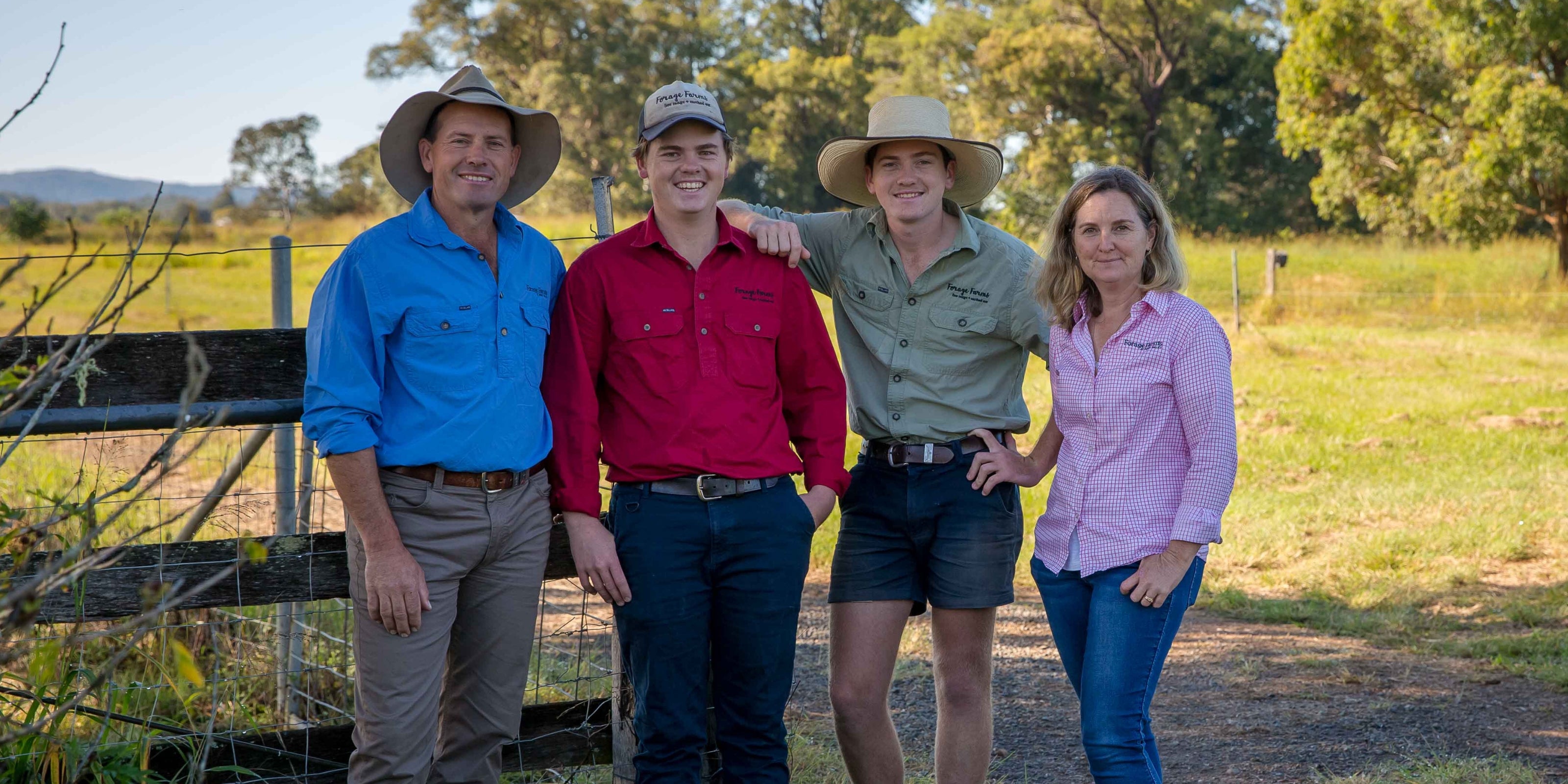
Forage Farms is a family operation located south of Gympie in the beautiful Mary Valley.
The story behind Forage Farms begins in the Bylong Valley where three generations of Andrews have lived on "Tarwyn Park" the celebrated home of Natural Sequence Farming, as developed by Stuart's father Peter Andrews. For over 40 years the family has been dedicated to understanding, practising and teaching methods of land rehabilitation. Natural Sequence Farming is used as a system of farming focused on implementing natural landscape functions back into degraded landscapes. The story of Tarwyn Park has been widely communicated with countless radio interviews and newspaper articles along with the story being featured on ABC’s Australian Story four times (these can be viewed here, here, here, and here).
This continued with Stuart creating Tarwyn Park Training, a training program for landholders throughout Australia to attend and learn about Natural Sequence Farming and how it can be implemented into their landscapes.
As a way of broadening the understanding of Natural Sequence Farming, Forage Farms was born to merge food production with landscape restoration.

The Connection Between Food and Farmer
We realised the key to changing the mindset around food production was connecting the farmer with the consumer.
People had to learn how their food was being produced, and the farmer had to know that the people wanted food produced with nature in mind and actively regenerating the land.
Forage Farms was started to create a model that the farmers we were educating in the training course could adopt—a model that focuses on restoring their landscapes and is actively supported by consumers for doing so.
This connection has only grown since we first began. More consumers want to know their farmers and how their food is being produced, while more farmers want to change their management and restore their landscapes. We see this as a pivotal shift that we are delighted to be a part of.

What We Stand For

Natural Sequence Farming
Every paddock is shaped into contours that slow water down instead of letting it race off the land. That water sinks in instead of running out, and everything else follows from there.

Regenerating Landscapes
Water that's slowed has to be filtered too, through plants, through soil, before it moves on. That's how a landscape heals itself instead of just surviving.

Family Farms
Three generations of Andrews, and now a growing number of other families too, all farming this way because it works, not because it's fashionable.

Chemical Free Farms
No pesticides, no herbicides, no artificial fertilisers. If the land can't grow it naturally, we don't force it.

Grass Fed + Finished
Diverse pasture, never grazed bare, always given the chance to recover. Diversity is king at Forage Farms, the more variety in the paddock, the better the animal, and the better the meat.

Pasture Raised
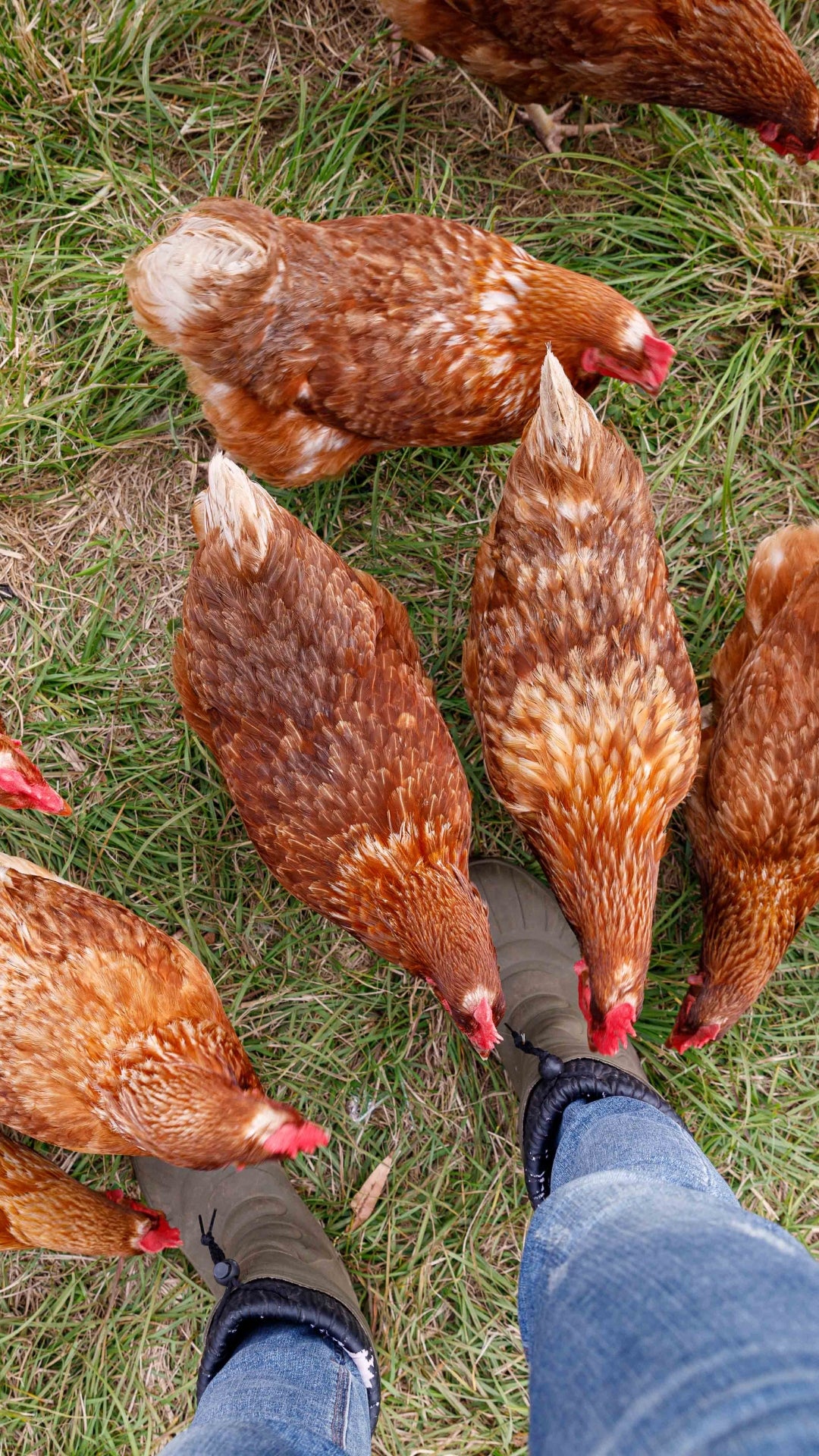
Always outside, always on the move, never confined. It's the difference between a label and a life.

Animal Welfare
We practise Low Stress Stock Handling and move our animals constantly, so they're always on fresh ground and never overworking the land beneath them.

Whole Animal Butchery
Respecting the animal means using all of it, not just the popular cuts. Less waste, more integrity.
Over the years, many people have referred to us as Forage Farm without the “s”, but there is a deliberate reason for that “s”.
When we first began, we had a long-term vision for what we wanted. A future whereby food production was valued for its importance, farmers were recognised for the incredible work that they do and supported for the way in which they manage their landscapes.
But we knew there was only so much that one farm could do, and we also realised that farming enterprises like ours could only be scaled so far while keeping quality and standards high.
We realised that the traditional mindset of scale had to be changed. We realised that Forage Farm needed to be replicated and become Forage Farms!
Our mission is to create a model whereby farmers are supported for their work and have a place to market the food they produce differently.
We want many Forage Farms to produce the same high-quality, nutritious, and bloody tasty products, and we’re excited to see that starting to take shape in 2025 with the arrival of our first farmers.
This is only the beginning, and we look forward to what’s yet to come.
It Hasn't Always Been Easy
None of this happened without cost.
Peter spent years being told he was wrong, sometimes worse than that, before Natural Sequence Farming was taken seriously. Tarwyn Park itself was eventually lost to the banks. Stuart took it back and ran it for fifteen years before starting Tarwyn Park Training in 2012, and Forage Farms followed on from there.
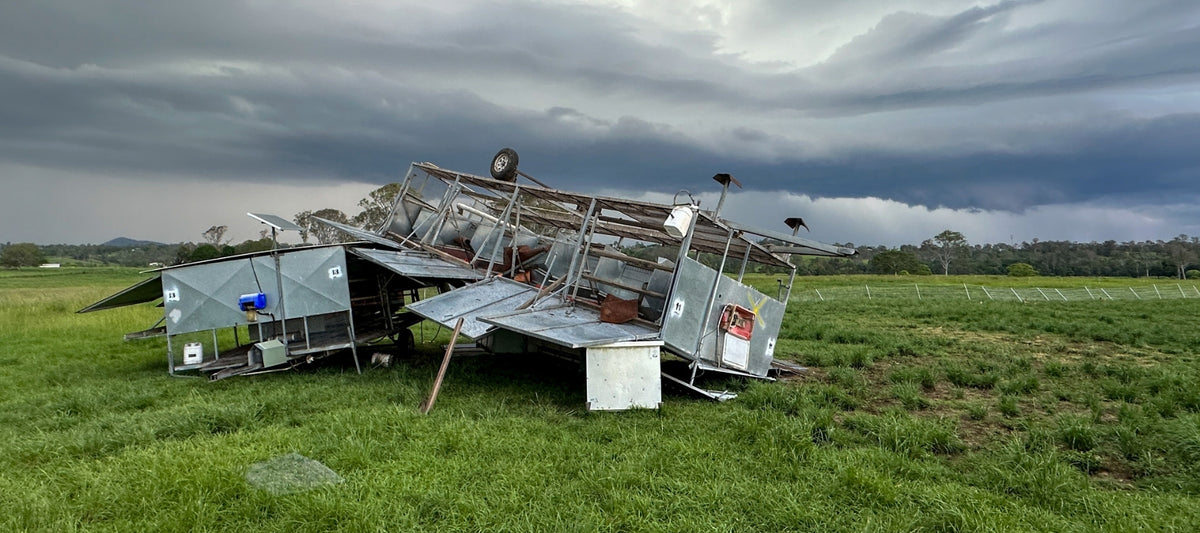
It hasn't been smooth since either. We've farmed through heatwaves and cold snaps, droughts and floods, sometimes both in the same year. A storm in 2023 destroyed three of our chicken tractors in one night. There were stretches where the flock simply wouldn't perform, and health challenges we had to work through from scratch. Breeding cattle that could handle coastal Queensland, on lower quality grass, with ticks and buffalo fly to contend with, and choosing not to reach for chemicals the way most operations would, meant going against almost everything the textbooks say. A local abattoir closure ended our meat chicken line overnight. We're now building our own on-farm abattoir, so that particular problem never catches us out again.
We tell you this not for sympathy, but because it matters to how we think about all of it. As Stuart puts it: if you cannot make a profit, there's no way I would be suggesting to anybody that they farm the way we farm. This has to work as a business, not just as an idea, or none of it means anything to the next farmer thinking about trying it too.
The Long Game
Regenerative farming doesn't reward anyone quickly. There are no shortcuts, and there's no instant fix, just a decade of consistent, unglamorous work.
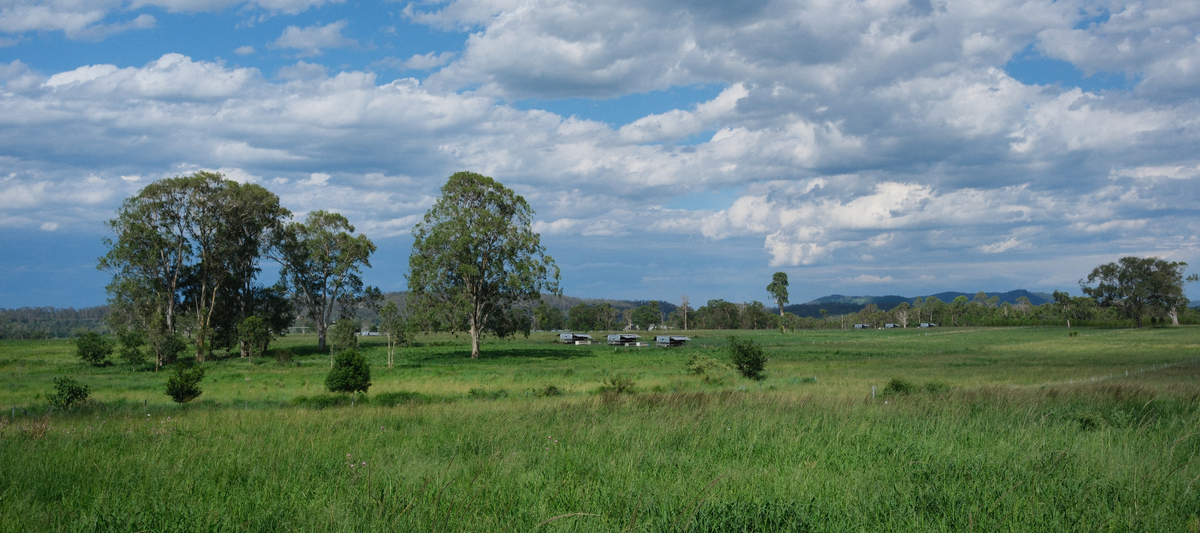
It's now ten years since we arrived at Forage Farms, and the change is real enough that people now ask us why our place is so much greener than everything around it.
Water management is where it shows most clearly. In our first two years here, 30mm of rain would just run straight off the top of the property, nothing soaked in. These days, we can get 150mm before any water even reaches our contours. It took about five years before we noticed the shift.
The land itself has changed just as much. We started with close to a monoculture of Bahia and Setaria grass. There are now nearly forty different plant species growing here, most of which arrived on their own once the conditions were right for them. The wildlife noticed too, bandicoots and native birds are back, there are far fewer cane toads than when we started, and pythons have become common where they never used to be.
The business grew alongside the land. What started as 12 backyard chooks at Tarwyn Park is now 10,000 commercial laying hens, and most of what we know about managing pasture, water and diversity at scale, we learned by getting it wrong first, then doing it again properly.
None of that happened by accident, and none of it happened fast. It happened because we kept showing up and doing the work, year after year, and trusted that the landscape would respond if we gave it the chance to.
Is This Your Kind Of Farm?
If you've read this far, you already know we're not chasing scale. We're chasing the right kind of growth: more Forage Farms, not one bigger one.
That means we're probably not your farm if you're after the cheapest meat in the fridge, or fresh, daily butcher-counter cuts. We can't compete there, and we're not trying to.
But if you'd rather know your farmer's name than the price per kilo, if you're happy to fill a freezer instead of shopping every week, and if you want to back farmers doing it properly even when it's slower and harder: welcome. You've found your farm.
How Our Products Compare


